


Long Story Short:
-
In July, all Members get $20 credit towards the Collagen-boosting C-Wave LED Facial Mask while they last.
-
LED masks went mainstream because they sit at the crossroads of beauty, wellness, and the longevity trend – science-backed, easy to use, and satisfying to do.
-
The underlying science: red and near-infrared light support collagen production, reduce redness, and improve skin texture over time.
-
The catch? Consistency. Three to four sessions a week. They're useless as a last-minute fix.
-
At-home devices win because they're low-effort enough to actually become a habit.
-
Beauty Pie's C-Wave LED Masks use the same factory-direct technology as the big-name versions, just without the markup.
How Looking Like Iron Man Became A Beauty Routine
Ten years ago, if your partner walked into the living room and found you wearing a glowing red silicone face mask, they would probably have assumed something had gone badly wrong - alien invasion, maybe?
Today, this very same scene is practically a sign of financial responsibility. After all, you can do quite a lot of almost-dermatology-level treatments at home now.
You can DIY your own Retinoids, follow up with heavy doses of Peptides. Pack clinical-strength Vitamin C in your carry-on. Even deliver a 655nm red light therapy treatment directly to your hair and scalp from the comfort of your sofa.
At some point between the rise of wellness culture, biohacking, longevity obsession (at least skin-longevity obsession) and social media, LED masks leapt into the mainstream bathroom essential category.
(Or bedroom, if you’re one of those who velcros yours on every morning when you hit the ‘snooze’ button.)
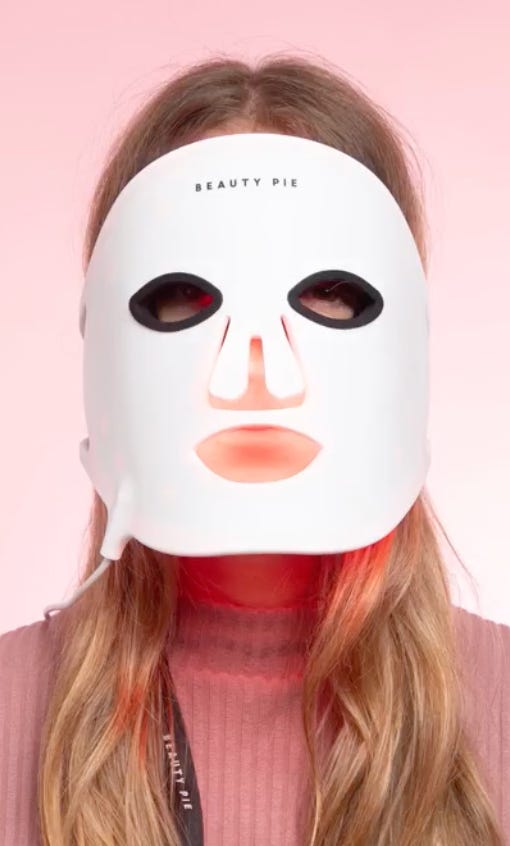
Of course, if you analyse the data, the LED trend didn’t happen by accident.
The Beauty Industry’s Favorite New Category
Every decade has a beauty obsession.
The 1990s gave us exfoliation (AHAs, BHAs, microdermabrasion. The 2000s gave us anti-aging (Retinol, SPF obsession, Vitamin C). The 2010s gave us injectables (Kybella, Juvederm, Restylane). And the 2020s appear to have given us devices.
Because devices solve a very modern problem: we all want visible results, but few of us want needles, downtime, swelling, bruising.
LED technology sits neatly in the middle. It’s science-y enough to deliver serious results. Easy enough to feel ‘doable’, every couple of days.
And there’s something about remembering to strap yourself in and hit that button (while meditating, or doing 10 minutes of somatic yoga, or listening to your morning positive affirmations) that makes you feel like you’ve actually accomplished something.
Then Came The Longevity Crowd
What really accelerated the LED wave wasn’t the beauty industry – it was the ‘longevity’ trend.
Suddenly, Brian Johnson was telling people not to die on a Netflix documentary, and people everywhere were scrambling to get on the bandwagons of recovery, inflammation, cellular health and ‘better aging’.
It was like the beauty industry and the wellness industry started dating. And LED was a right swipe for both.
Which is why you’ll now find red-light devices being discussed by dermatologists, athletes, wellness founders, tech bros and aestheticians with equal enthusiasm.
The Iron Man Effect
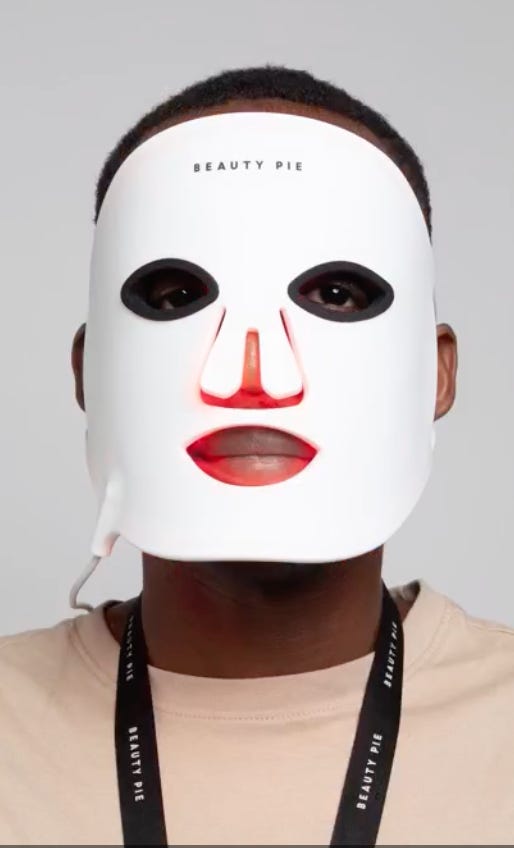
Now, let’s be honest, part of LED-mania is psychological.
Skincare products can feel a bit passive. You apply them regularly (especially your ABC + SPFs).
You wait. You have expectations after one full skin cycle (6 weeks). But there’s a willing suspension of disbelief until you see your face change.
On the other hand, devices feel active. You’re actually doing something. We humans love that feeling. It’s why Pelotons sell, and fitness trackers sell. And why people buy standing desks and cold plunge pools and weighted training vests. Of course, whether or not those things get used consistently is a very individual thing.
And no, perching your vitamin gummies on top of your standing desk does not ‘pretty much’ mean you’re using that desk daily. (Did you read the recent headline: Sitting is killing us?)
Do LED Masks Actually Work?
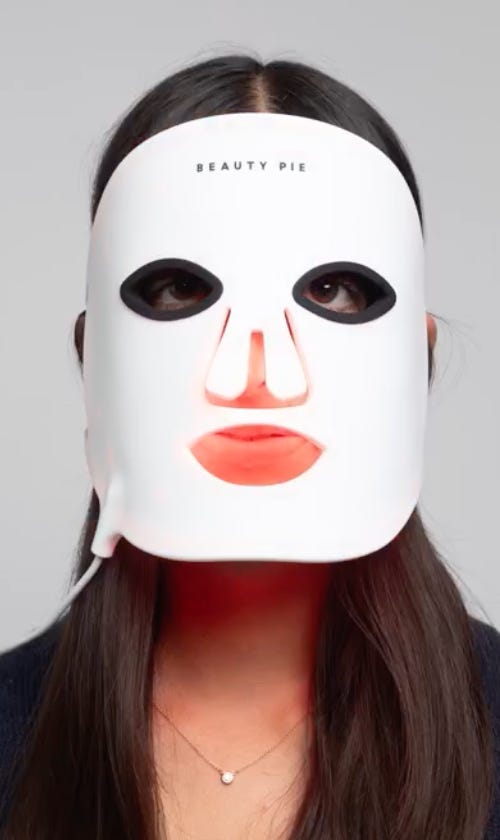
Here’s the truth – compared with a lot of other beauty trends (South Korean snail mucus, anyone?) the underlying science for LED is very respectable.
It’s not ‘facelift’ territory. No miracles will be experienced, nor will it shave twenty years off your face.
But LED therapy is legitimate, particularly when used consistently over time.
Red and near-infrared light are used to support skin function so that it looks smoother, firmer and more even over time. And the same lights (red and near-infrared) are associated with collagen-production-related pathways, can reduce visible redness and deliver general skin regeneration.
The catch? Consistency.
LED masks work best as a habit. Three or four sessions a week. Regularly. They will do nothing when deployed as an emergency flare you fire at your face three days before a wedding.
This is where at-home devices make sense. Use your Face LED Mask while repeating your morning positive affirmations on Spotify. Your Neck LED Mask while answering emails. Your Hand LED Mask while watching Law & Order reruns.
Low drama. Low effort. Much better odds of it actually happening.
Because the real question isn’t:
“Do LED Masks really work?”
The real question is:
“Will you actually use your LED Mask?”
Because even the best device in the world has a remarkably poor track record when left in a drawer.
The Bottom Line on LED Masks?
To LED or not to LED?
Well, LED masks aren’t popular because they’re fashionable; they’re popular because they sit at the intersection of three powerful modern desires: to look younger, to avoid expensive invasive procedures (and pain), and to feel like we’re keeping our skin as healthy and ‘youthful-looking’ as it possibly can be. (While simultaneously plastering ourselves in Swiss Retinoids, powerful stable Vitamin C, Peptides, Niacinamides and daily SPF, obviously.)
A critical mass of people (experts included) have given LED-ing the ‘thumbs up’. Which means, yes, as part of a modern skincare routine, you will probably want to LED.
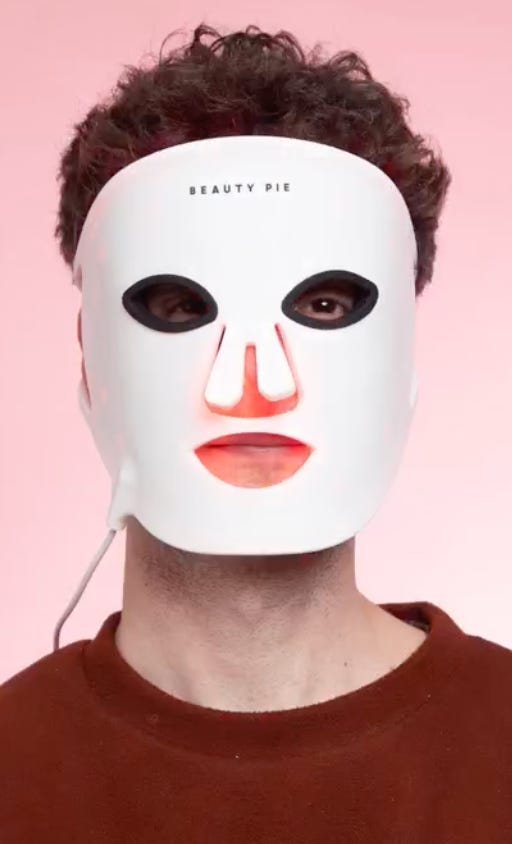
But if you travelled back ten years and showed someone a room full of average adults voluntarily sitting on sofas watching Netflix dressed like glowing stormtroopers, they probably wouldn’t have believed you.
Beauty Pie’s C-Wave Facial LED Masks come factory-direct from the manufacturer in Asia, with the same technology as the $299 mask that’s on the market.


